10 modi per essere più felici

  1. Fare ginnastica
  2. Seguire una dieta anti-infiammatoria
  3. Integrarla con olio di pesce e vitamina D
  4. Assumere erbe anti-depressive (tipo l’iperico, non quella cui stavate pensando)
  5. Fare esercizi di respirazione
  6. Tentare una terapia cognitivo-comportamentale (CBT)
  7. Ridere
  8. Evitare l’esposizione ai media (il data smog fa male!)
  9. Perdonare
  10. Praticare la gratitudine.

Bastasse questo!

Dr. Andrew Weil: 10 Ways to Have a Happier Life

In my new book, “Spontaneous Happiness,” I write about lifestyle practices that can help people achieve and maintain happy lives. Bear in mind that by “happy,” I am not referring to endless bliss. Despite what many in the media proclaim these days, such a state is neither achievable nor desirable. Instead, these practices are designed to help most people reach and maintain a state of contentment and serenity. From there, a person can still experience appropriate emotional highs and lows, but knows that he or she will soon return to a pleasant state that might be termed emotional sea level.

Edward O. Wilson: conoscere la biodiversità per salvare il pianeta

Opinion: Exploring a Little-Known Planet | The Scientist

Edward O. Wilson

Jim Harrison, photographer Harvard News Office

To know well the full biodiversity of Earth is not important simply to add figures to textbooks. The real purpose of science must be the original Linnaean goal: to find and take full account of each and every species of organism on Earth.

Pubblicato su Segnalazioni. 1 Comment »

Non è mai troppo tardi

Newton aveva 23 anni quando formulò la teoria della forza di gravità. Einstein ne aveva 26 quando pubblicò il paper sull’effetto fotoelettrico che gli fruttò il Nobel 16 anni dopo. Marie Curie studiò la radioattività del radio e del polonio prima dei 30 anni. Secondo uno studio pubblicato ieri, ormai la probabilità di pubblicare uno studio meritevole del Nobel prima dei 30 anni è prossima a 0.

Q&A: Aging Geniuses | The Scientist

Newton Einstein Curie

Wikipedia.org

Isaac Newton was just 23 years old when, while on a brief hiatus from Cambridge University, he developed his theory of gravitation. “For in those days I was in my prime of age for invention, and minded mathematics and philosophy more than at any time since,” he later wrote in a letter to a fellow scholar.

Similarly, at age 26, Einstein published the paper on the photoelectric effect that would win him a Nobel Prize 16 years later in 1921. Marie Curie was around 30 when she, along with her husband Pierre, discovered the radioactive elements radium and polonium.

But according to economists Benjamin Jones and Bruce Weinberg, young scientists making groundbreaking contributions to their fields are becoming an endangered breed. In a study published yesterday (November 8) in the Proceedings of the National Academy of Sciences, they reported that the chances a Nobel Prize winner at the turn of the 21st century produced their winning work by the age 30 or even 40 is close to zero.

Their analysis of 525 Nobel Prize winners (182 in physics, 153 in chemistry, and 190 in medicine) between 1900 and 2008, revealed that while the mean age at which they did their Nobel-prize winning work was around 37 for the three fields in the early 20th century, they are now around 50, 46, and 45 for Physics, Chemistry, and Medicine, respectively. The Scientist spoke to Weinberg, a microeconomist at Ohio State University, and Jones, a macroeconomist at the The Kellogg School of Management, Northwestern University, about the trends in age and creativity in science, and what they may mean for the future of science research.

Idee degli anni Ottanta

Da qualche giorno sono alla ricerca delle idee degli anni Ottanta che sarebbero alla base delle proposte di Matteo Renzi.

Finora le migliori che ho trovato sono queste:

Oh yeah
In France a skinny man
Died of a big disease with a little name
By chance his girlfriend came across a needle
And soon she did the same
At home there are seventeen-year-old boys
And their idea of fun
Is being in a gang called The Disciples
High on crack, totin’ a machine gun

Time, time

Hurricane Annie ripped the ceiling of a church
And killed everyone inside
U turn on the telly and every other story
Is tellin’ U somebody died
Sister killed her baby cuz she couldn’t afford 2 feed it
And we’re sending people 2 the moon
In September my cousin tried reefer 4 the very first time
Now he’s doing horse, it’s June

Times, times

It’s silly, no?
When a rocket ship explodes
And everybody still wants 2 fly
Some say a man ain’t happy
Unless a man truly dies
Oh why
Time, time

Baby make a speech, Star Wars fly
Neighbors just shine it on
But if a night falls and a bomb falls
Will anybody see the dawn
Time, times

It’s silly, no?
When a rocket blows up
And everybody still wants 2 fly
Some say a man ain’t happy, truly
Until a man truly dies
Oh why, oh why, Sign O the Times

Time, time

Sign O the Times mess with your mind
Hurry before it’s 2 late
Let’s fall in love, get married, have a baby
We’ll call him Nate… if it’s a boy

Time, time

Time, time

Berlusconi Dismisses Resignation Reports – NYTimes.com

Siamo ormai lo zimbello del pianeta:

Malconcio per gli scandali sessuali e le innumerevoli indagini su presunte scorrettezze finanziarie entro il suo vasto impero economico, Mr. Berlusconi è stato infine costretto all’angolo da fattori esterni all’Italia e fuori dal suo controllo.

Berlusconi Dismisses Resignation Reports – NYTimes.com

Calls by Mr. Berlusconi’s critics for his resignation doubled over the weekend after Italy last week agreed to allow the International Monetary Fund to monitor restructuring steps aimed at containing its ballooning debt and boosting its stagnant economy.

Mr. Berlusconi’s ability to steer Italy, Europe’s third largest economy, has been called into question by a prolonged deadlock in Parliament over the scope of sweeping changes encompassing everything from pensions to privatizations.

Lawmakers from his Peoples of Liberty party have begun to openly criticize Mr. Berlusconi, a censure that would have been unthinkable until a few months ago.

Over the past two weeks, a steady trickle of defectors has left the party. By most counts on Monday, Mr. Berlusconi had lost his majority in the lower house, where he has held on to power for nearly a year with only a handful of votes.

Battered by sex scandals and countless investigations into alleged financial improprieties within his vast business holdings, Mr. Berlusconi was ultimately backed into a corner by factors outside of Italy that he could not control.

Brain parasite directly alters brain chemistry – University of Leeds

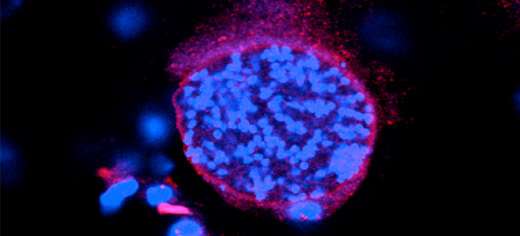
La storia è questa: i topi infettati dal parassita Toxoplasma gondii (quello della toxoplasmosi) diventano imprudenti, quindi vengono più facilmente uccisi e mangiati dai gatti, consentendo al parassita stesso di completare il suo ciclo vitale. Ora questi ricercatori dell’Università di Leeds hanno scoperto che il meccanismo con cui il parassita ottiene questo risultato è inducendo un’iperproduzione del neurotrasmettitore dopamina. Tutto ciò non è irrilevante, perché il toxoplasma infetta anche gli umani (finora, di pensava, senza particolari conseguenze).

Brain parasite directly alters brain chemistry – University of Leeds

Research shows infection by the brain parasite Toxoplasma gondii, found in 10-20 per cent of the UK’s population, directly affects the production of dopamine, a key chemical messenger in the brain.

Findings from the University of Leeds research group are the first to demonstrate that a parasite found in the brain of mammals can affect dopamine levels.

Whilst the work has been carried out with rodents, lead investigator Dr Glenn McConkey of the University’s Faculty of Biological Sciences, believes that the findings could ultimately shed new light on treating human neurological disorders that are dopamine-related such as schizophrenia, attention deficit hyperactivity disorder, and Parkinson’s disease.

This research may explain how these parasites, remarkably, manipulate rodents’ behaviour for their own advantage. Infected mice and rats lose their innate fear of cats, increasing the chances of being caught and eaten, which enables the parasite to return to its main host to complete its life cycle.

In this study, funded by the Stanley Medical Research Institute and Dunhill Medical Trust, the research team found that the parasite causes production and release of many times the normal amount of dopamine in infected brain cells.


Lavoce.info – QUALI SONO LE IMPRESE CHE BATTONO LA CRISI

La crisi non ha interrotto il processo di ristrutturazione delle imprese italiane. Al contrario, sembra aver accelerato la selezione delle imprese, aprendo il ventaglio della performance fra aziende che hanno saputo comunque crescere durante la crisi e quelle che invece ne sono state travolte.

Un bell’articolo di Fabiano Schivardi.

Lavoce.info – ARTICOLI – QUALI SONO LE IMPRESE CHE BATTONO LA CRISI

Google Changes Search Algorithm, Trying to Make Results More Timely – NYTimes.com

Google Changes Search Algorithm, Trying to Make Results More Timely – NYTimes.com

Giovedì scorso (3 novembre 2011) Google ha rivisto il suo algoritmo di ricerca, con l’obiettivo di produrre risultati più tempestivi. Si tratta di una delle revisioni più importanti introdotte finora e riguarderà oltre un terzo delle ricerche.

In chiesa con la pistola

Guns in Church? A Wisconsin Pastor Begs Congregants Not to Pack Heat on Sunday Morning After Concealed Carry Law Passes | | AlterNet

I vescovi cattolici del Wisconsin chiedono ai fedeli di non andare in chiesa con la pistola, ora che una nuova legge di quello stato consente ai cittadini di portare liberamente armi nascoste.

The evolution of deceit – Neuroscience – Salon.com

The evolution of deceit – Neuroscience – Salon.com

L’inganno e l’autoinganno sono stati e sono centrali alla strategia evoluzionistica della specie umana. Salon ne parla in questa intervista a Robert Trivers, autore di The Folly of Fools, appena pubblicato.

The Folly of Fools

betterworldbooks.com