Doccia scozzese – FT.com

Una nota di ottimismo …

Italian bond yields dip below 7% – FT.com

The Italian markets were helped by signs that political deadlock in Rome may be easing.

Italian 10-year bond yields dropped to 6.88 per cent, a fall of 36 basis points on the day after lurching higher initially.

Italy’s extra cost to borrow over Germany also eased back by 42bp to 510bp. This is significant as it means clearing houses, which fuelled the sell-off on Wednesday, are less likely to impose additional margin charges for the trading of the country’s bonds.

[E oggi va persino meglio]

… e una di pessimismo.

Why Italy’s days in the eurozone may be numbered | The A-List | Must-read views on today’s top news stories – FT.com – FT.com

Even a change in Italian government to a coalition headed by a respected technocrat will not change the fundamental problem – that spreads have reached a tipping point, that output is free-falling and that, given a debt to GDP ratio of 120 per cent, Italy needs a primary surplus of over 5 per cent of GDP just to prevent its debt from blowing up.

Output now is in a vicious free fall. More austerity and reforms – that are necessary for medium-term sustainability – will make this recession worse. Raising taxes, cutting spending and getting rid of inefficient labour and capital during structural reforms have a negative effect on disposable income, jobs, aggregate demand and supply. The recessionary deflation that Germany and the ECB are imposing on Italy and the other periphery countries will make the debt more unsustainable.

Se Roubini ha ragione, non ne veniamo fuori.

Ovvia, un’ondata d’ottimismo!

I have been examining and re-examining the situation, trying to find the potential happy ending. It isn’t there. The euro zone is in a death spiral. Markets are abandoning the periphery, including Italy, which is the world’s eighth largest economy and third largest bond market. This is triggering margin calls and leading banks to pull credit from the European market. This, in turn, is damaging the European economy, which is already being squeezed by the austerity programmes adopted in every large euro-zone economy. A weakening economy will damage revenues, undermining efforts at fiscal consolidation, further driving away investors and potentially triggering more austerity. The cycle will continue until something breaks. Eventually, one economy or another will face a true bank run and severe capital flight and will be forced to adopt capital controls. At that point, it will effectively be out of the euro area. What happens next isn’t clear, but it’s unlikely to be pretty.

The euro crisis: Finito? | The Economist

L’opinion cloud interattiva dell’Economist

Andate a vederla, vale la pena.

E in questo momento siamo i più grandi!

Topics most commented on | The Economist

Beati gli hacker, perché loro è il regno dei cieli

Sempre grandissimi i gesuiti: ammetto di avere un debole per loro.

Il nuovo direttore de La Civiltà Cattolica, Antonio Spadaro S.J., è un cyberpadre. Nel numero 1 del 2011 (pp. 536-549) ha pubblicato un articolo dal titolo «Etica “hacker” e visione cristiana», in cui sostiene di avere riscontrato che la cultura hacker parla la lingua dei valori teologici. Ne dà conto l’Economist nell’articolo segnalato qui sotto..

“THE kingdom of heaven belongs to such as these,” Jesus said of little children. But computer hackers might give the kids some competition, according to Antonio Spadaro, an Italian Jesuit priest. In an article published earlier this year in La Civiltà Cattolica, a fortnightly magazine backed by the Vatican, entitled “Hacker ethics and Christian vision”, he did not merely praise hackers, but held up their approach to life as in some ways divine. Mr Spadaro argued that hacking is a form of participation in God’s work of creation. (He uses the word hacking in its traditional, noble sense within computing circles, to refer to building or tinkering with code, rather than breaking into websites. Such nefarious activities are instead known as “malicious hacking” or “cracking”.)

Mr Spadaro says he became interested in the subject when he noticed that hackers and students of hacker culture used “the language of theological value” when writing about creativity and coding, so he decided to examine the idea more deeply. The hacker ethic forged on America’s west coast in the 1970s and 1980s was playful, open to sharing, and ready to challenge models of proprietary control, competition and even private property. Hackers were the origin of the “open source” movement which creates and distributes software that is free in two senses: it costs nothing and its underlying code can be modified by anyone to fit their needs. “In a world devoted to the logic of profit,” wrote Mr Spadaro, hackers and Christians have “much to give each other” as they promote a more positive vision of work, sharing and creativity.

Monitor: What would Jesus hack? | The Economist

Peccato che, come spesso accade, padre Spadaro predichi bene ma razzoli male: il suo articolo non può essere letto o scaricato gratuitamente dal sito della prestigiosa rivista che dirige. Per fortuna ha un blog, Cyberteologia, su cui vi segnalo il prezioso articolo Gli Hackers, la Genesi e il senso della vita. Buona lettura.

Aggiornamrento del 4 gennaio 2011. Mi scrive Antonino Rao:

Il 27 marzo 2011, prima che lei scrivesse questo articolo, l’articolo di Spadaro a cui lei fa riferimento è stato postato per intero ed è liberamente accessibile da chiunque sempre in cyberteologia.it:
http://www.cyberteologia.it/2011/03/etica-hacker-e-visione-cristiana-ecco-larticolo-full-text-apparso-su-la-civilta-cattolica/

Gli sono grato della segnalazione e provvedo immediatamente a condividerla con voi e a scusarmi con padre Spadaro per la critica immeritata.

Pubblicato su Segnalazioni. 4 Comments »

D’Ippoliti-Roncaglia – L’Italia: una crisi nella crisi

Per comprendere meglio che cosa è successo, che cosa sta succedendo, che cosa potrebbe succedere ancora e qualche suggerimento su come venirne fuori, suggerisco di leggere questo bell’articolo di Carlo D’Ippoliti e Alessandro Roncaglia uscito su Moneta e Credito [vol. 64 n. 255 (2011), 189-227]. Non è una lettura facile, ma nemmeno questi tempi lo sono.

L’Italia: una crisi nella crisi | Insight

[…] la speculazione finanziaria ha scelto gli spread sul debito pubblico
dei paesi dell’area dell’euro, e non gli altri, come obiettivo operativo
intermedio per una scommessa di carattere più generale, relativa alla
solidità dell’euro in quanto moneta sovranazionale […]

La cosa poteva essere facilmente prevista: se non sono più possibili le
speculazioni sui cambi tra le valute dei vari paesi dell’Unione Europea,
assumendo che tali paesi mantengano un andamento non convergente nel
tempo, le tensioni sono destinate a scaricarsi sulla valutazione di solidità
dei titoli del debito pubblico dei vari paesi, quindi sugli spread.

[…]

Come notava già Keynes riguardo al sistema di Bretton Woods, un
sistema a cambi fissi (e a maggior ragione un’unione monetaria) che lasci
tutto il peso della correzione degli squilibri macroeconomici sui soli paesi
in deficit è prono alla deflazione e difficilmente genera piena
occupazione, sia nei paesi in surplus sia in quelli in deficit. Dunque, la
strategia di uscita dalla crisi dell’euro dovrebbe consistere nel rilancio
della crescita economica, con strumenti di politica attiva a livello
continentale (iniziando dai cosiddetti eurobond e dalla realizzazione di
progetti europei di infrastrutture, oltre che da una politica monetaria che
persegua, come la Fed, sia la stabilità dei prezzi sia la piena occupazione
e non il primo obiettivo soltanto, come invece prevede l’attuale statuto
della BCE). Dovrebbe invece essere limitata allo stretto indispensabile
l’imposizione di misure di austerità, rinunciando all’imposizione di rigide
tabelle di marcia per la riduzione del debito in proporzione del PIL. Tali
misure, peraltro, difficilmente potranno garantire la solvibilità di alcuni
paesi (come la Grecia) o la sostenibilità del debito di altri […]

10 modi per essere più felici

  1. Fare ginnastica
  2. Seguire una dieta anti-infiammatoria
  3. Integrarla con olio di pesce e vitamina D
  4. Assumere erbe anti-depressive (tipo l’iperico, non quella cui stavate pensando)
  5. Fare esercizi di respirazione
  6. Tentare una terapia cognitivo-comportamentale (CBT)
  7. Ridere
  8. Evitare l’esposizione ai media (il data smog fa male!)
  9. Perdonare
  10. Praticare la gratitudine.

Bastasse questo!

Dr. Andrew Weil: 10 Ways to Have a Happier Life

In my new book, “Spontaneous Happiness,” I write about lifestyle practices that can help people achieve and maintain happy lives. Bear in mind that by “happy,” I am not referring to endless bliss. Despite what many in the media proclaim these days, such a state is neither achievable nor desirable. Instead, these practices are designed to help most people reach and maintain a state of contentment and serenity. From there, a person can still experience appropriate emotional highs and lows, but knows that he or she will soon return to a pleasant state that might be termed emotional sea level.

Edward O. Wilson: conoscere la biodiversità per salvare il pianeta

Opinion: Exploring a Little-Known Planet | The Scientist

Edward O. Wilson

Jim Harrison, photographer Harvard News Office

To know well the full biodiversity of Earth is not important simply to add figures to textbooks. The real purpose of science must be the original Linnaean goal: to find and take full account of each and every species of organism on Earth.

Pubblicato su Segnalazioni. 1 Comment »

Non è mai troppo tardi

Newton aveva 23 anni quando formulò la teoria della forza di gravità. Einstein ne aveva 26 quando pubblicò il paper sull’effetto fotoelettrico che gli fruttò il Nobel 16 anni dopo. Marie Curie studiò la radioattività del radio e del polonio prima dei 30 anni. Secondo uno studio pubblicato ieri, ormai la probabilità di pubblicare uno studio meritevole del Nobel prima dei 30 anni è prossima a 0.

Q&A: Aging Geniuses | The Scientist

Newton Einstein Curie

Wikipedia.org

Isaac Newton was just 23 years old when, while on a brief hiatus from Cambridge University, he developed his theory of gravitation. “For in those days I was in my prime of age for invention, and minded mathematics and philosophy more than at any time since,” he later wrote in a letter to a fellow scholar.

Similarly, at age 26, Einstein published the paper on the photoelectric effect that would win him a Nobel Prize 16 years later in 1921. Marie Curie was around 30 when she, along with her husband Pierre, discovered the radioactive elements radium and polonium.

But according to economists Benjamin Jones and Bruce Weinberg, young scientists making groundbreaking contributions to their fields are becoming an endangered breed. In a study published yesterday (November 8) in the Proceedings of the National Academy of Sciences, they reported that the chances a Nobel Prize winner at the turn of the 21st century produced their winning work by the age 30 or even 40 is close to zero.

Their analysis of 525 Nobel Prize winners (182 in physics, 153 in chemistry, and 190 in medicine) between 1900 and 2008, revealed that while the mean age at which they did their Nobel-prize winning work was around 37 for the three fields in the early 20th century, they are now around 50, 46, and 45 for Physics, Chemistry, and Medicine, respectively. The Scientist spoke to Weinberg, a microeconomist at Ohio State University, and Jones, a macroeconomist at the The Kellogg School of Management, Northwestern University, about the trends in age and creativity in science, and what they may mean for the future of science research.

Berlusconi Dismisses Resignation Reports – NYTimes.com

Siamo ormai lo zimbello del pianeta:

Malconcio per gli scandali sessuali e le innumerevoli indagini su presunte scorrettezze finanziarie entro il suo vasto impero economico, Mr. Berlusconi è stato infine costretto all’angolo da fattori esterni all’Italia e fuori dal suo controllo.

Berlusconi Dismisses Resignation Reports – NYTimes.com

Calls by Mr. Berlusconi’s critics for his resignation doubled over the weekend after Italy last week agreed to allow the International Monetary Fund to monitor restructuring steps aimed at containing its ballooning debt and boosting its stagnant economy.

Mr. Berlusconi’s ability to steer Italy, Europe’s third largest economy, has been called into question by a prolonged deadlock in Parliament over the scope of sweeping changes encompassing everything from pensions to privatizations.

Lawmakers from his Peoples of Liberty party have begun to openly criticize Mr. Berlusconi, a censure that would have been unthinkable until a few months ago.

Over the past two weeks, a steady trickle of defectors has left the party. By most counts on Monday, Mr. Berlusconi had lost his majority in the lower house, where he has held on to power for nearly a year with only a handful of votes.

Battered by sex scandals and countless investigations into alleged financial improprieties within his vast business holdings, Mr. Berlusconi was ultimately backed into a corner by factors outside of Italy that he could not control.

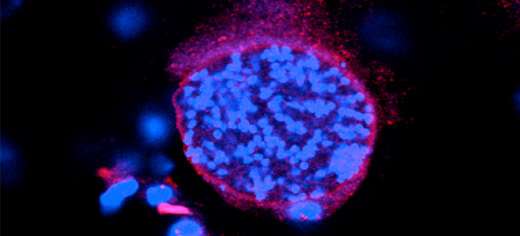
Brain parasite directly alters brain chemistry – University of Leeds

La storia è questa: i topi infettati dal parassita Toxoplasma gondii (quello della toxoplasmosi) diventano imprudenti, quindi vengono più facilmente uccisi e mangiati dai gatti, consentendo al parassita stesso di completare il suo ciclo vitale. Ora questi ricercatori dell’Università di Leeds hanno scoperto che il meccanismo con cui il parassita ottiene questo risultato è inducendo un’iperproduzione del neurotrasmettitore dopamina. Tutto ciò non è irrilevante, perché il toxoplasma infetta anche gli umani (finora, di pensava, senza particolari conseguenze).

Brain parasite directly alters brain chemistry – University of Leeds

Research shows infection by the brain parasite Toxoplasma gondii, found in 10-20 per cent of the UK’s population, directly affects the production of dopamine, a key chemical messenger in the brain.

Findings from the University of Leeds research group are the first to demonstrate that a parasite found in the brain of mammals can affect dopamine levels.

Whilst the work has been carried out with rodents, lead investigator Dr Glenn McConkey of the University’s Faculty of Biological Sciences, believes that the findings could ultimately shed new light on treating human neurological disorders that are dopamine-related such as schizophrenia, attention deficit hyperactivity disorder, and Parkinson’s disease.

This research may explain how these parasites, remarkably, manipulate rodents’ behaviour for their own advantage. Infected mice and rats lose their innate fear of cats, increasing the chances of being caught and eaten, which enables the parasite to return to its main host to complete its life cycle.

In this study, funded by the Stanley Medical Research Institute and Dunhill Medical Trust, the research team found that the parasite causes production and release of many times the normal amount of dopamine in infected brain cells.