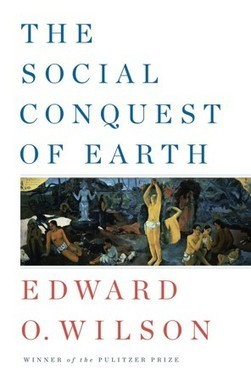
What Does E.O. Wilson Mean By a “Social Conquest of the Earth”

See on Scoop.itRecensioni

In his new book, The Social Conquest of Earth, E.O. Wilson explains his theory of everything—how hominids evolved, why war is common, how social insects became social, and why ants and bees and humans are so successful. Science writer Carl Zimmer spoke with Wilson.

See on www.smithsonianmag.com

Edward O. Wilson’s New Book, ‘Social Conquest of Earth’

See on Scoop.itRecensioni

The biologist Edward O. Wilson has a new book, “The Social Conquest of Earth,” and it is already prompting sharp criticism from fellow scientists.
See on www.nytimes.com

Book review: ‘The Social Conquest of Earth,’ by Edward O. Wilson

See on Scoop.itRecensioni

In “The Social Conquest of Earth,” Edward O. Wilson seeks to answer the big questions of humanity.
See on www.washingtonpost.com

Edward O. Wilson – The Social Conquest of Earth

Wilson, Edward O. (2012). The Social Conquest of Earth. New York: W. W. Norton. 2012. ISBN 9780871404138. Pagine 330. 15,24 €

The Social Conquest of Earth

amazon.com

Edward O. Wilson è un vecchio signore del Sud (è nato a Birmingham in Alabama il 10 giugno 1929 – a proposito, auguri in ritardo!). Ne abbiamo parlato più volte su questo blog, da ultimo qui (mi pare), ma soprattutto recensendo il suo unico romanzo, Anthill. Purtroppo, ho letto gli altri suoi libri in epoca ante-blog e quindi non li ho recensiti qui (né da nessuna altra parte, perché non mi imponevo quella forma di disciplina che il blog ha portato con sé).

Ho però raccontato, nella recensione al romanzo, che questo vecchio signore del Sud dall’aria serena è stato al centro di furiose polemiche per il suo Sociobiology. The New Synthesis del 1975. Adesso è di nuovo al centro delle polemiche per questo libro che, nelle sue intenzioni, voleva essere una sintesi dei suoi studi sugli organismi eu-sociali – come li chiama lui stesso – cioè gli insetti sociali e gli umani.

Il problema è che per fare questo, Wilson ha bisogno di rigettare la teoria della kin selection originariamente formulata da Hamilton e cui Wilson stesso aveva aderito all’epoca di Sociobiology e aderire invece a quella della group selection, vivacemente e ferocemente avversata dai darwiniani puri e duri.

Sorgono spontanee 2 domande:

  1. chi ha ragione nella disputa, Wilson o i suoi oppositori? o meglio: è sostenibile una teoria della group selection? e quella della kin selection è davvero stata smentita?
  2. nell’ipotesi che il libro di Wilson sia affetto da errori teorici gravi, vale la pena egualmente di leggerlo?

* * *

Sulla prima questione, per affrontarla senza troppi tecnicismi, penso sia opportuno partire dal punto specifico del libro di Wilson in cui l’autore abbandona la prospettiva della kin selection:

For almost half a century, it has been popular among serious scientists seeking a naturalistic explanation for the origin of humanity, I among them, to invoke kin selection as a key dynamical force of human evolution. […]
Unfortunately for this perception, the foundations of the general theory of inclusive fitness based on the assumptions of kin selection have crumbled, while evidence for it has grown equivocal at best. The beautiful theory never worked well anyway, and now it has collapsed.
A new theory of eusocial evolution, drawn in part from my collaboration with the theoretical biologists Martin Nowak and Corina Tarnita, and in part from the work of other researchers, provides separate accounts for the origin of eusocial insects on the one hand and the origin of human societies on the other. [859-866. Il riferimento è come di consueto alle posizioni sul Kindle]

Naturalmente, abbandonare una posizione cui si era aderito in passato è perfettamente lecito: solo gli imbecilli, si dice, restano attaccati alle proprie idee contro ogni evidenza come patelle agli scogli. Quello che però Wilson non dice – e questo io lo trovo particolarmente grave in un libro rivolto al pubblico non specialistico – è che l’articolo di Nowak, Tarnita & Wilson “The evolution of eusociality“, pubblicato nel 2010 sul numero 466 di Nature, ha suscitato un vespaio di polemiche: sia perché l’articolo non sarebbe transitato attraverso il normale processo di peer review grazie all’autorevolezza di Wilson (succede anche a Nature, evidentemente), sia perché le conclusioni cui giunge sono state contestate da circa 150 scienziati in 5 risposte al paper di Nowak, Tarnita & Wilson. Quello che questi scienziati sostengono è che la teoria della kin selection e della inclusive fitness sono tutt’altro che crollate, come invece Wilson dà per assodato.

Questo spiega ampiamente perché The Social Conquest of Earth sia stato accolto con molte critiche e poco entusiasmo. Ne riassumo qualcuna di quelle con cui sono entrato in contatto.

Michael Gazzaniga sul Wall Street Journal del 6 aprile 2012 (Evolution Revolution) paragona la delusione provata leggendo quest’ultima prova di Wilson con quella che gli appassionati di jazz sono destinati a provare, prima o poi, per i loro beniamini:

At a certain point in their careers, great jazz musicians are almost bound to disappoint their fans. Think of John Coltrane venturing into free jazz in the late 1960s or Miles Davis going electric a few years later. The vision that made them great the first time pushes them into new territory, and the magnitude of their early accomplishments – and the number of admirers they have attracted – makes their public’s sense of betrayal all the more bitter. All they can do is keep playing, undaunted by the dissent.

La metafora jazzistica è anche funzionale a notare che (purtroppo) Wilson procede per improvvisazione, per grandi pennellate, nascondendoci il dettaglio del ragionamento che lo ha portato ad abbandonare il modello della inclusive fitness. ed evitando di rispondere alle critiche dei 150 scienziati che hanno contestato il suo modello su Nature.

Jazz artists improvise. Mr. Wilson does too as he goes through his argument in “The Social Conquest of Earth.” I say “improvise” because he chooses not to give the reader the complete story, properly annotated with references that would capture the huge controversies that accompany almost all the facts he reviews. […] While Mr. Wilson may have tired of all the rancor, it would have been intriguing to have his full account of how he arrived at his conclusions.

Jennifer Schuessler sul New York Times dell’8 aprile, più che una recensione, ci offre un ritratto di Edward O. Wilson (Lessons From Ants to Grasp Humanity) che non rifugge però dal riassumere i termini della controversia:

If no one is quite ready to dump a pitcher of water over Dr. Wilson’s head, many colleagues are mystified and dismayed by his late-life embrace of group selection – a highly controversial notion among biologists – and rejection of the kin-selection theory that he helped popularize in “Sociobiology.”
“ ‘Sociobiology’ is still a very great book, and now he’s trashing it all,” said Jerry Coyne, a professor of ecology and evolution at the University of Chicago. “It’s crazy.” Dr. Coyne was one of more than 150 scientists who signed four letters published last spring in the journal Nature criticizing a 2010 paper by Dr. Wilson, written with the mathematicians Martin A. Nowak and Corina E. Tarnita, outlining his group-selection arguments.
But Dr. Wilson, putting on a fleece vest under his professorial green tweed jacket in preparation for a rainy walk through Central Park, seemed unruffled by the fracas, which is only passingly acknowledged in the new book. “I don’t mind it,” he said of the criticism, adding that he had full confidence in his co-authors’ complex math. “I actually expect it for any important change. No pain, no gain.”

Un concetto simile era già stato espresso da Wilson in un articolo di Jonah Lehrer comparso sul numero del 5 marzo 2012 del New Yorker (Kin and Kind. A fight about the genetics of altruism):

“I’ve always been an ambitious synthesizer,” he told me. “But I’m now wise enough to know the limitations of that approach.” These days, he regards the books that made him famous – ”Sociobiology” and “On Human Nature” (1979) – as flawed accounts of evolution, marred by their uncritical embrace of inclusive fitness.

La recensione di Steven Mithen – appena pubblicata su The New York Review of Books, nel numero datato 21 giugno 2012 (How Fit Is E.O. Wilson’s Evolution?) – ha il pregio, secondo me, di mettere chiaramente in luce le responsabilità dello scienziato che scrive per il vasto pubblico e non per gli specialisti e i colleghi:

My greater concern is about the responsibility of the scientist writing for the general reader, especially a scientist of Wilson’s academic reputation. Such readers, the type targeted by Wilson and his publisher, may never have heard of Nature and would be unlikely to consult endnotes. Such readers, owing to his failure to acknowledge the extent of opposition to his views, would be entirely misled into thinking that Wilson had indeed “demonstrated that inclusive fitness theory, often called kin selection theory, is both mathematically and biologically incorrect.”
[…] I cannot avoid the impression that the manner in which Wilson presents his views verges toward polemic rather than providing a responsible work of popular science.

Ho lasciato di proposito per ultima la recensione più completa, e anche la più feroce: quella di Richard Dawkins pubblicata su Prospect del 24 maggio 2012 (The descent of Edward Wilson. A new book on evolution by a great biologist makes a slew of mistakes). Suggerirei, se il vostro inglese lo consente (ma se non lo consentisse probabilmente non leggereste questo blog), di leggere l’articolo di Dawkins nella sua interezza, per almeno 3 motivi:

  1. Dawkins scrive bene e in modo molto chiaro e articolato;
  2. Dawkins è un polemista pungente ed efficacissimo (a tratti uno prova anche un po’ pena per il malcapitato Wilson);
  3. La spiegazione di Dawkins dei motivi per cui ritiene corretta la teoria della kin selection ed erronea quella della group selection.

Per i più pigri (e per mio gusto) metterò qui i punti essenziali:

[I]it was a good idea to write a book comparing these two pinnacles of social evolution [social insects and humans], but unfortunately one is obliged to wade through many pages of erroneous and downright perverse misunderstandings of evolutionary theory. In particular, Wilson now rejects “kin selection” (I shall explain this below) and replaces it with a revival of “group selection” – the poorly defined and incoherent view that evolution is driven by the differential survival of whole groups of organisms.
[…]
Then there’s the patrician hauteur with which Wilson ignores the very serious drubbing his Nature paper received. He doesn’t even mention those many critics: not a single, solitary sentence. Does he think his authority justifies going over the heads of experts and appealing directly to a popular audience, as if the professional controversy didn’t exist – as if acceptance of his (tiny) minority view were a done deal? “The beautiful theory [kin selection, see below] never worked well anyway, and now it has collapsed.” Yes it did and does work, and no it hasn’t collapsed. For Wilson not to acknowledge that he speaks for himself against the great majority of his professional colleagues is – it pains me to say this of a lifelong hero – an act of wanton arrogance.
[…]
“Inclusive fitness” was coined as a mathematical device to allow us to keep treating the individual organism (“vehicle”) as the level of agency, when we could equivalently have switched to the gene (“replicator”). You can say that natural selection maximises individual inclusive fitness, or that it maximises gene survival. The two are equivalent, by definition. On the face of it, gene survival is simpler to deal with, so why bother with individual inclusive fitness? Because the organism has the appearance of a purpose-driven agent in a way that the gene does not. Genes lack legs to pursue goals, sense organs to perceive the world, hands to manipulate it. Gene survival is what ultimately counts in natural selection, and the world becomes full of genes that are good at surviving. But they do it vicariously, by embryologically programming “phenotypes”: programming the development of individual bodies, their brains, limbs and sense organs, in such a way as to maximise their own survival. Genes programme the embryonic development of their vehicles, then ride inside them to share their fate and, if successful, get passed on to future generations.
So, “replicators” and “vehicles” constitute two meanings of “unit of natural selection.” Replicators are the units that survive (or fail to survive) through the generations. Vehicles are the agents that replicators programme as devices to help them survive. Genes are the primary replicators, organisms the obvious vehicles. But what about groups? As with organisms, they are certainly not replicators, but are they vehicles? If so, might we make a plausible case for “group selection”?
It is important not to confuse this question – as Wilson regrettably does – with the question of whether individuals benefit from living in groups. Of course they do. Penguins huddle for warmth. That’s not group selection: every individual benefits. Lionesses hunting in groups catch more and larger prey than a lone hunter could: enough to make it worthwhile for everyone. Again, every individual benefits: group welfare is strictly incidental. Birds in flocks and fish in schools achieve safety in numbers, and may also conserve energy by riding each other’s slipstreams – the same effect as racing cyclists sometimes exploit.
Such individual advantages in group living are important but they have nothing to do with group selection. Group selection would imply that a group does something equivalent to surviving or dying, something equivalent to reproducing itself, and that it has something you could call a group phenotype, such that genes might influence its development, and hence their own survival.
[…]
Edward Wilson has made important discoveries of his own. His place in history is assured, and so is Hamilton’s. Please do read Wilson’s earlier books […]. As for the book under review, the theoretical errors I have explained are important, pervasive, and integral to its thesis in a way that renders it impossible to recommend. To borrow from Dorothy Parker, this is not a book to be tossed lightly aside. It should be thrown with great force. And sincere regret.

* * *

Ecco, Dawkins risponde negativamente alla mia seconda domanda (nell’ipotesi che il libro di Wilson sia affetto da errori teorici gravi, vale la pena egualmente di leggerlo?). Io sono però di diverso parere, e penso che invece possa essere letto fruttuosamente, anche se con qualche cautela.

Il breve capitolo 5, intitolato Threading the evolutionary maze, è un capolavoro di sintesi che riassume in 2 pagine l’origine dell’umanità da una prospettiva evoluzionistica.

E la metafora del labirinto evoluzionistico è un efficacissiomo esempio di intuition pump:

The possible evolution of a species can be visualized as a journey through a maze. As a major advance such as the origin of eusociality is approached, each genetic change, each turn in the maze either makes the attainment of that level less likely, or even impossible, or else keeps it open for access to the next turn. In the earliest steps that keep other options alive, there is still a long way to go, and the ultimate, far distant attainment is least probable. In the last few steps, there is only a short distance to go, and the attainment becomes more probable. The maze itself is subject to evolution along the way. Old corridors (ecological niches) may close, while new ones may open. The structure of the maze depends in part on who is traveling through it, including each of the species. [414]

Ma nel libro ci sono anche altri spunti profondi, che aprono vaste prospettive di riflessione. Ad esempio sulla divisione del lavoro, all’origine della crescita economica e del progresso:

Along with fireside campsites came division of labor. It was spring-loaded: an existing predisposition within groups to self-organize by dominance hierarchies already existed. There were in addition earlier differences between males and females and between young and old. Further, within each subgroup there existed variations in leadership ability, as well as in the proneness to remain at the campsite. The inevitable result emerging quickly out of all these preadaptations was a complex division of labor. [811]

O la riflessione che, l’acquisto di informazione ha un costo, la sua perdita è gratis:

For the neuroscientist, this explanation of an ethical decision by the would-be knifer has one very attractive feature: it involves only the loss of information, not its effortful acquisition or storage. The learning of complex information and its storage in memory are deliberate, painstaking processes, but the loss of information seems to take place with no trouble at all. Damping any one of the many mechanisms involved in memory can explain the blurring of identity required by this theory. [3981]

Ci sono poi le incursioni nei campi dell’economia …

Additional studies suggest (but have not yet conclusively proved) that leveling is beneficial even for the most advanced modern societies. Those that do best for their citizens in quality of life, from education and medical care to crime control and collective self-esteem, also have the lowest income differential between the wealthiest and poorest citizens. Among twenty-three of the world’s wealthiest countries and individual U.S. states, according to an analysis in 2009 by Richard Wilkinson and Kate Pickett, Japan, the Nordic countries, and the U.S. state of New Hampshire have both the narrowest wealth differential and the highest average quality of life. At the bottom are the United Kingdom, Portugal, and the remainder of the United States. [4037]

… della politica …

If personal benefit from group memberships rises high enough or, alternatively, if selfish leaders can bend the colony to serve their personal interests, the members will be prone to altruism and conformity. Because all normal members have at least the capacity to reproduce, there is an inherent and irremediable conflict in human societies between natural selection at the individual level and natural selection at the group level. [911]

… della religione …

The evidence that lies before us in great abundance points to organized religion as an expression of tribalism. Every religion teaches its adherents that they are a special fellowship and that their creation story, moral precepts, and privilege from divine power are superior to those claimed in other religions. […] The goal of religions is submission to the will and common good of the tribe. [4186-4192]

For outsiders openly to doubt such dogmas is regarded an invasion of privacy and a personal insult. For insiders to raise doubt is punishable heresy. [4197]

… della musica …

Patel has referred to music as a “transformative technology.” To the same degree as literacy and language itself, it has changed the way people see the world. Learning to play a musical instrument even alters the structure of the brain, from subcortical circuits that encode sound patterns to neural fibers that connect the two cerebral hemispheres and patterns of gray matter density in certain regions of the cerebral cortex. Music is powerful in its impact on human feeling and on the interpretation of events. It is extraordinarily complex in the neural circuits it employs, appearing to elicit emotion in at least six different brain mechanisms. [4583]

Ci sono poi alcune frasi fulminanti nella loro profondità:

[…] from diversity comes opportunity […] [480]

In a constantly changing world, we need the flexibility that only imperfection provides. [3887]

[…] prepared learning, the inborn propensity to learn something swiftly and decisively. [1009]

E infine, “semplici” esempi di divertito “bello scrivere”.

We have created a Star Wars civilization, with Stone Age emotions, medieval institutions, and godlike technology. [201]

Now, except for behaving like apes much of the time and suffering genetically limited life spans, we are godlike. [4639]

[…] the response of Samuel Foote to John Montagu, fourth Earl of Sandwich, when warned that he would die either by venereal disease or by the hangman’s noose. Foote responded, “My Lord, that will depend upon whether I embrace your lordship’s mistress or your lordship’s morals.” [4028]

* * *

PS: mentre mi accingevo a esporre questo post sulla bacheca è sceso in campo (contro le tesi di Wilson e a favore della teoria dell’inclusive fitness) un altro pezzo da novanta, Steven Pinker. L’articolo è molto lingo e anche in questo caso vi invito ad andarlo a leggere per intero, su Edge: è stato pubblicato il 18 giugno 2012 ed è intitolato “The False Allure of Group Selection“.

John Williams – Stoner

Williams, John (1965). Stoner. New York: New York Review Books Classics. 2010. ISBN 9781590173930. Pagine 305. 8,61 €

Stoner

amazon.com

Quando ero molto più giovane di adesso, tra la fine del liceo e l’inizio dell’università, ho cominciato a scrivere un romanzo. Non penso fosse una cosa tanto rara o speciale: penso che molti di noi l’abbiano fatto, o almeno immaginato.

Poi non l’abbiamo nemmeno iniziato, o comunque non terminato: e sarà stato probabilmente un destino provvidenziale, per il pianeta e per noi stessi. Inevitabilmente, direi. Il Boris dell’epoca aveva vissuto fino ad allora una vita relativamente breve e priva di grandi eventi. La sua famiglia era una famiglia mediamente felice, e quindi poco interessante secondo il celebre incipit di Anna Karenina. Negli anni successivi sarebbe stata martoriata da una serie di perdite importanti, come se la morte giocasse agli Orazi e ai Curiazi; ma all’epoca, a parte una nonna amatissima, c’erano ancora tutti. Quanto a quello che sarebbero state persone importanti nella mia vita, non le avevo ancora incontrate. Insomma, non c’era abbastanza materia per scrivere un romanzo, tant’è che non lo scrissi.

Però una cosa l’avevo: il nome del protagonista e io narrante. Si chiamava Giobbe. Non conoscevo il romanzo di Joseph Roth (che sarebbe stato pubblicato anni dopo), ma conoscevo bene il personaggio biblico: paziente e rassegnato fino al grottesco, ma gigantesco nella sua calma resistenza a una divinità capricciosa, che lo tormenta per scommessa e poi è così arrogante da giustificarsi tirando in ballo la creazione, l’ippopotamo e il leviatano … Insomma, Giobbe doveva rappresentare secondo me la grandezza del flemmatico, di quello che si piega ma non si spezza: l’esatto opposto del giovane impetuoso e irascibile che ero (e che sono, nonostante tutto).

Ho ripensato a questo perché William Stoner, il protagonista dell’omonimo romanzo, è un Giobbe moderno. Il romanzo, riscoperto da poco, è bellissimo, ma una delle cose più disperatamente tristi che mi sia capitato di leggere.

È stato riscoperto alcuni anni fa dalla New York Review of Book, che l’ha ripubblicato nel 2006 (l’opera è del 1965):

William Stoner is born at the end of the nineteenth century into a dirt-poor Missouri farming family. Sent to the state university to study agronomy, he instead falls in love with English literature and embraces a scholar’s life, so different from the hardscrabble existence he has known. And yet as the years pass, Stoner encounters a succession of disappointments: marriage into a “proper” family estranges him from his parents; his career is stymied; his wife and daughter turn coldly away from him; a transforming experience of new love ends under threat of scandal. Driven ever deeper within himself, Stoner rediscovers the stoic silence of his forebears and confronts an essential solitude.
John Williams’s luminous and deeply moving novel is a work of quiet perfection. William Stoner emerges from it not only as an archetypal American, but as an unlikely existential hero, standing, like a figure in a painting by Edward Hopper, in stark relief against an unforgiving world.

Stoner ha avuto nel tempo molti autorevoli ammiratori – il New York Times ricorda Irving Howe su The New Republic nel 1966, C. P. Snow su The Financial Times nel 1973, Dan Wakefield su Ploughshares nel 1981 e Steve Almond su Tin House nel 2003 – senza aver mai goduto di grande successo: e non stento a crederlo, dal momento che la sua perfezione e la sua disperata tristezza sono una cosa sola. Se dovessi riassumerlo in una frase sarebbe questa:

He was forty-two years old, and he could see nothing before him that he wished to enjoy and little behind him that he cared to remember.

A me ha fatto pensare molto a James Joyce, quello di Portrait of the Artist as a Young Man: ogni breve capitolo di Stoner è costruito e scandito da un’epifania.

Morris Dickstein, recensendolo sul NYT (Sunday Book Review) del 17 giugno 2007 scriveva:

John Williams’s “Stoner” is something rarer than a great novel — it is a perfect novel, so well told and beautifully written, so deeply moving, that it takes your breath away.
[…]
“Stoner” is a western in a more poignant sense. Its hero, the son of hard-working, dirt-poor farmers, inherits their taciturn stoicism, born of sheer adversity — their hardened accommodation to the whims of fate. William Stoner enters the state university in 1910 to study agriculture, but his life changes irrevocably when he comes upon literature in a sophomore survey course. His future mentor humiliates him by asking him to explain Shakespeare’s Sonnet 73, a poem about love and loss that foreshadows Stoner’s own future. Shakespeare’s aging speaker compares himself to “bare ruin’d choirs where late the sweet birds sang,” and adds: “In me thou see’st the glowing of such fire, / That on the ashes of his youth doth lie.” Following Stoner through two world wars, the novel captures both the fire of his inarticulate passion and the glowing embers it leaves behind.
Only two passions matter in Stoner’s life, love and learning, and in a sense he fails at both. His wife, his first love, turns cold and repellent almost from the moment he meets her. Their honeymoon, in which she submits to him with distaste, must be one of the grimmest ever recorded in fiction. Soon we learn, with a clang of inevitability, that “within a month he knew that his marriage was a failure; within a year he stopped hoping that it would improve. He learned silence and did not insist upon his love.” Stoner’s deeply ingrained reticence is a keystone of the novel. This is the story of an ordinary man, seemingly thwarted at every turn, but also of the knotty integrity he preserves, the deep inner life behind the impassive facade.
The man’s professional career could also be seen as a failure, though it gives him quiet satisfaction. He is neither a great teacher nor a noted scholar […]  A gifted but bitter colleague, touched by the same knowledge, turns against him in one of those toxic departmental feuds that bedevils the rest of his career. The one book Stoner produces is soon forgotten. His distrust of glib brilliance, his concern with ancient theories of grammar and rhetoric, make him look pedantic. Stoner’s cast of mind is monastic, unworldly. He is reduced to teaching menial courses to students who only dimly sense the warmth and conviction he brings to them.
The same quiet depth of feeling redeems his love life. Caught in an empty shell of a marriage, though too stoical to end it, he bonds deeply with his young daughter. But his resentful wife evicts him from his daughter’s life, as she evicts them both from the book-lined study where they often take refuge. Stoner responds with a helpless sense of resignation. But in his 40s he begins an affair with a talented scholar half his age, which leads to a precious interlude of unlooked-for happiness. Like his discovery of literature, this intimacy becomes an awakening to the possibilities of life. Their deep attraction, luminously described, combines love and learning as forms of passionate knowing — the true North Star of Williams’s fiction. “Day by day, the layers of reserve that protected them dropped away. … They made love, and talked, and made love again, like children who did not think of tiring at their play.” Though their affair is broken up by Stoner’s academic nemesis, who threatens scandal, it offers a hint of paradise that hovers dreamily over the rest of the novel.
Stoner’s physical decline is premature but inexorable, his death almost anonymous. Yet few stories this sad could be so secretly triumphant, or so exhilarating. Williams brings to Stoner’s fate a quality of attention, a rare empathy, that shows us why this unassuming life was worth living.

In italiano è stato pubblicato da poco da Fazi, nella traduzione di Stefano Tummolini. Irene Bignardi ne ha scritto una bellissima recensione su la Repubblica l’11 marzo 2012:

Riscoprendo Stoner l’uomo qualunque di una minitragedia

Se è vero che tutte le famiglie felici si assomigliano tra loro, e che ogni famiglia infelice è infelice a modo suo, l’infelicità dei singoli – l’infelicità senza eventi, l’infelicità senza ragioni, l’infelicità della gente mite, di chi non reagisce, non contrattacca – è più difficile da raccontare. Come quella di Stoner, protagonista e antieroe eponimo di un singolare romanzo di John Williams (Fazi). Singolare perché racconta una vita fallita. Perché racconta una storia che non si muove dal suo baricentro. Perché registra una vicenda umana così simile a tante da non essere, all’apparenza, interessante. E da esserlo proprio perché nella gentilezza e nella non reattività del protagonista riconosciamo le mille vite non avventurose, modeste, sbagliate, moderatamente infelici, ma senza lasciare traccia, che abbiamo incrociato. C’è più che un sospetto di autobiografismo, in Stoner. Anche il suo autore, John Williams, era nato in un ambiente contadino. Williams, come il suo Stoner, si era innamorato della letteratura e aveva cambiato il destino che gli era stato disegnato. Aveva fatto ogni possibile lavoro. Aveva combattuto in India e Birmania durante la guerra, per poi laurearsi al ritorno all’Università del Missouri, proprio quella di Stoner, anche se gli anni sono diversi. Avrebbe insegnato lì per trent’anni e scritto tre romanzi, per essere presto dimenticato – salvo riemergere grazie ai suoi ammiratori, tra cui C. P. Snow, e, recentemente, per essere riscoperto dalla New York Review of Books. E il fascino del libro sta proprio nel metterci attraverso Stoner e la sua storia dalla parte dei dimenticati, degli umiliati e offesi della vita, di chi vive un profondo masochismo da gentilezza, di chi non sa reagire, offendere per difendersi, cambiare le carte in tavola. Basterebbe il racconto della luna di miele di Stoner con la sua giovane moglie, che, quanto a sensazione di disagio, fa il paio solo con il disastro di cui fa la cronaca McEwan in Chesil Beach. O la progressione per cui, mano a mano, i suoi spazi a casa si restringono, senza che lui alzi mai la voce, fino a lasciargli per lavorare poco più che la superficie di un tavolino. O la mitezza con cui, consapevole delle proprie doti limitate, e tuttavia profondamente innamorato del suo lavoro di insegnante e delle gioie che gli dà la letteratura, accetta la guerra, inspiegabile e feroce, che gli fa un collega, umiliandolo di fronte al corpo insegnante del suo college e ai suoi allievi. Quello che David Lodge racconterebbe con irresistibile humour nella vita di Stoner diventa una malinconica minitragedia. E quando finalmente la vita gli offre l’incontro con un’occasione d’amore nella persona di una giovane studiosa, tutto gli si rivolta contro. Il ritorno alla solitudine è il suo destino, e la sua la tragedia di un uomo qualunque che non sa né vuole combattere, che di questa remissività, del fallimento che ne segue, è in qualche misura fiero. Williams registra questa vicenda umana con una prosa in minore, pudica e asciutta, attenta ai dettagli, distaccata e affezionata allo stesso tempo: per un ritratto (un autoritratto?) che ci mette a disagio e non si dimentica.

***

Il riferimento è come di consueto alle posizioni sul Kindle:

I’m too bright for the world, and I won’t keep my mouth shut about it; it’s a disease for which there is no cure. [582]

Like many men who consider their success incomplete, he was extraordinarily vain and consumed with a sense of his own importance. [1012]

He had come to that moment in his age when there occurred to him, with increasing intensity, a question of such overwhelming simplicity that he had no means to face it. He found himself wondering if his life were worth the living; if it had ever been. […] He took a grim and ironic pleasure from the possibility that what little learning he had managed to acquire had led him to this knowledge: that in the long run all things, even the learning that let him know this, were futile and empty, and at last diminished into a nothingness they did not alter. [2888-2894]

He was forty-two years old, and he could see nothing before him that he wished to enjoy and little behind him that he cared to remember. [2914]

“I am not ill,” she said. And she added in a voice that was calm, speculative, and almost uninterested, “I am desperately, desperately unhappy.” [3094]

In his forty-third year William Stoner learned what others, much younger, had learned before him: that the person one loves at first is not the person one loves at last, and that love is not an end but a process through which one person attempts to know another. [3121]

In his extreme youth Stoner had thought of love as an absolute state of being to which, if one were lucky, one might find access; in his maturity he had decided it was the heaven of a false religion, toward which one ought to gaze with an amused disbelief, a gently familiar contempt, and an embarrassed nostalgia. Now in his middle age he began to know that it was neither a state of grace nor an illusion; he saw it as a human act of becoming, a condition that was invented and modified moment by moment and day by day, by the will and the intelligence and the heart. [3130]

He aged rapidly that summer, so that when he went back to his classes in the fall there were few who did not recognize him with a start of surprise. His face, gone gaunt and bony, was deeply lined; heavy patches of gray ran through his hair; and he was heavily stooped, as if he carried an invisible burden. […] he attended faithfully all departmental meetings. He did not speak often at these meetings, but when he did he spoke without tact or diplomacy, so that among his colleagues he developed a reputation for crustiness and ill temper. [3510-3517]

He had wanted love; and he had had love, and had relinquished it, had let it go into the chaos of potentiality. [4427]

La cassetta degli attrezzi dello scettico (Panicology 2)

Alla presentazione da parte dei media di storie che contengono informazione statistica o scientifica, a meno di essere creduloni, è facile reagire con il cinismo. Noi incoraggiamo piuttosto lo scetticismo. Per questo, vi proponiamo una cassetta degli attrezzi per l’interpretazione dei dati e delle informazioni in cui ci imbattiamo nella vita quotidiana.

  • Interesse particolare: Chi ha fatto quella specifica affermazione? Poteva avere un suo interesse? Ci ha detto tutto?
  • Espressioni ambigue: Dovrebbero far scattare subito un campanello d’allarme – soprattutto quelle fortemente connotate emotivamente, come “peste”, o quelle che sembrano indicare una strada senza ritorno verso la catastrofe, come “inevitabile”. È inevitabile che dopo il giorno venga la notte, ma non che ci sarà un attacco terroristico. Puoi essere in “irreparabile in ritardo” per una riunione iniziata un’ora fa, ma un’eruzione vulcanica, un terremoto o un’epidemia può essere “in ritardo” soltanto sulla base di un’argomentazione basata sul calcolo delle probabilità. Altre parole potrebbero avere un significato “tecnico” diverso da quello corrente. Quando le statistiche ufficiali parlano delle “forze di lavoro” contano tutti quelli che hanno lavorato almeno un’ora nella settimana di riferimento, e dunque un boom degli occupati potrebbe dipendere dall’impiego di studenti come baby-sitter o come barman una sera alla settimana. Voi lo considerate lavoro?
  • Rilevazioni e sondaggi: Chi li ha fatti? Sono attendibili? Hanno una motivazione ovvia? Chi li ha finanziati? Interi ambiti di studio possono diventare pericolosamente dipendenti dal finanziamento da parte di una sola fonte, sia essa commerciale, governativa o di un gruppo di pressione. I quesiti sono formulati in modo neutrale? Quanto è grande il campione? Troppo piccolo e i risultati saranno distorti; troppo grande e gli autori potrebbero cercare di persuadervi schiacciandovi sotto una mole di dati. La dimensione del campione e i margini d’errore sono pubblicati? Quando un produttore di cibo per gatti afferma che 4 gatti su 5 preferiscono il suo prodotto, lo ha fatto assaggiare solo a 5 gatti? Come sono stati raccolti i dati?
  • Dati: Confrontateli tra loro. Guardate a tutti i possibili effetti di un cambiamento, non soltanto a uno. Confrontate passato e presente. Confrontate tra loro i Paesi. E se non ci sono i dati per fare questi confronti così ovvi, chiedetevi il perché: qualcuno vi sta nascondendo qualche cosa?
  • Percentuali e valori assoluti: Chi ha una storia da raccontare o una tesi da sostenere sceglie sempre il modo più impressionante di presentare le cose.
  • Aneddoti e statistiche: I timori si diffondono per passaparola e per notizie televisive e di stampa che riprendono vicende individuali strazianti; le autorità spesso rispondono con statistiche roboanti. Un confronto sensato tra aneddoti e statistiche è molto difficile. In un certo senso, possono entrambi essere “veri”.
  • Grafici: Come i testi e le cifre, possono essere soggetti a errori o a distorsioni deliberate. Non date loro credito acriticamente soltanto perché tecnici all’apparenza.
  • Scala temporale: Questa è una cosa importante, che parole come “inevitabile” confondono. Il livello del mare sta salendo, ma in un arco temporale molto più lungo di quello della pianificazione urbanistica: quindi c’è tutto il tempo per adattarsi e porvi rimedio. Molte serie di dati hanno 3 componenti: una tendenza di lungo periodo, variazioni cicliche di più breve durata e le singole osservazioni (spesso erratiche). È importante esserne avvertiti, in modo da non cadere in inganno.
  • Perché adesso?: Chiedetevi perché la notizia viene divulgata proprio ora e se sarebbe stato altrettanto degna di pubblicazione in un diverso momento. Gli articoli sul riscaldamento globale sono più frequenti d’estate; quelli sui pericoli dei viaggi alla vigilia delle vacanze; i sondaggi sul sesso per San Valentino.
  • Disfattismo: State in guardia quando vi viene detto che a proposito di qualche cosa non c’è niente da fare: se così fosse, perché dircelo? Solo per allarmarci e per diffondere il panico?
  • Paure classiste: Diffidate dei timori legati a vantaggi di cui una qualche élite gode ma che si vogliono negare agli altri. Per esempio, quando si afferma che le crisi ambientali o sanitarie sono provocate o esacerbate dai voli low cost, dai cibi esotici, dall’automezzo privato, dalla scelta dei trattamenti sanitari, dall’istruzione universale e così via.
  • Scenari: Molti modelli di studio economici e scientifici producono una intera gamma di scenari futuri: accertatevi che quello che vi viene presentato non sia il solo scenario peggiore.
  • Considerate anche gli aspetti positivi: Non date per scontato che, se alcune cose vanno per il peggio, tutte seguano la stessa tendenza. Questo è il mestiere dei media sensazionalistici. Prendete il riscaldamento globale: è vero che tra 100 anni sarà più caldo, ma che cosa potrebbe aver escogitato l’intelligenza umana nel frattempo? Nuove fonti energetiche? Un metabolismo umano geneticamente modificato? Una fotosintesi più efficiente?  Fantascienza, direte. Certo, ma guardate che cosa è stato fatto negli ultimi 100 anni.
  • Il senso delle proporzioni: È un male se 100 persone muoiono di influenza aviaria, ma in un Paese di 50 milioni di abitanti è una frazione molto piccola. Quanti sono morti per altre cause?
  • Il senso del ridicolo: Cercate di tenere i piedi per terra, anche se i personaggi pubblici non lo fanno. Il ministro dell’interno tedesco Wolfgang Schaeuble insiste che il terrorismo islamico è la più grande minaccia alla stabilità tedesca. Vi sembra anche solo remotamente credibile o sta semplicemente cercando di dare importanza al suo ruolo nel governo?
L'urlo di Munch

wikipedia.org

* * *

In questo modo si conclude Panicology, il libro di Aldersley-Williams e Briscoe che ho recensito un paio di giorni fa. È, a parer mio, la parte migliore del libro e merita di essere meditata da tutti, indipendentemente dalla recensione (lo so che molti di voi, quando vedono che il post è una recensione, dicono «Che palle!» e cliccano su un’altra pagina). Sopra c’è la mia traduzione ma, poiché mi sono preso qualche libertà, propongo qui sotto ai più volonterosi l’originale.

For those not inclined to credulousness, it is easy to be cynical about the media in its presentation of stories involving statistical or scientific information. We would rather encourage skepticism. With this in mind, we offer this toolkit for the interpretation of data or information that come our way.

  • Vested interest: Ask yourself who has made a particular statement. Why might they have done this? Are we being told the whole story?
  • Weasel words: These should ring alarm bells – especially emotive ones such as “plague,” or ones that put us on a one-way trip to disaster such as “inevitable” and “overdue.” It is inevitable that night follows day, but it is not inevitable that there will be a terrorist attack.You can be overdue for a meeting that started an hour ago, but a volcanic eruption, an earthquake, or an outbreak of disease is only ever overdue based on arguments of probability. Other words may not have the obvious meaning. Government surveys of the “work force” count anyone who has worked one hour or more in a week, so a boost in the numbers working could be down to children babysitting or students spending an evening behind a bar. Is this what you consider work?
  • Surveys: Who conducted it? Are they credible? Do they have an obvious motive? Who paid them? Whole fields of study can become unhealthily dependent on funds from one source, whether that source is commercial, governmental, or charitable. Were the questions neutrally worded? How big is the sample? Too small, and the result may be skewed; too big, and the authors may be trying to use sheer weight of numbers to persuade you. Is the sample size and margin of error shown? When a pet food manufacturer says that four out of five cats prefer their product, did they only feed five cats? How were the data collected?
  • Figures: Try to compare figures. Look at as many of the effects of a change as possible, not just one. Compare the present with the past. Compare one country with another. If the data aren’t there to make the obvious comparison, ask yourself what is being obscured.
  • Percentages and actual numbers: People with a story to tell will choose the more impressive way of putting things.
  • Anecdote and statistics: Fears are spread by word of mouth, press, and television reports based on harrowing individual stories; authorities frequently counter these with broad statistics. Meaningful comparison between the two is hard. Both may be “true”.
  • Graphs and charts: Like words and figures, these may be subject to error or deliberate distortion. Don’t automatically believe them because they look technical.
  • Timeframe: This is an important factor that words like “inevitable” gloss over. Sea levels are rising, but over a longer period than housing planning cycles, so there is time to adapt. Many data series have a long-run trend, a shorter cyclical variation, and then (often erratic) individual data points. Be aware of each so as not to be tricked.
  • Why now: Ask yourself why the story is appearing now, and whether it would be equally newsworthy at another time. Global warming stories appear more in the summer. Travel fears play well as people set off on their holidays. Sex surveys are often released in time for Valentine’s Day.
  • Defeatism: Be wary when told there is nothing we can do about something. Why then are we being told about it? Is it merely to alarm us, or to put us in a state of fear?
  • Scare snobs: Distrust scares where an elite is trying to deny others advantages they already enjoy, for example environmental and health crises exacerbated by cheap flights, exotic food, private modes of transport, choice in medicine and education.
  • Scenarios: Many economic and scientific studies model a range of future scenarios. Make sure that the outcome described is not just the worst-case scenario.
  • Accentuate the positive: Don’t discount the possibility that even if some things are getting worse, others may get better-which negative newspaper stories make it their business to do. It will get warmer in 100 years, but what might human ingenuity have devised by then? New energy sources? Genetically modified human metabolism? Improved photosynthesis? Science fiction, you might say, and so it is-for now. But think what has been achieved over the last 100 years.
  • The big picture: It’s bad if 100 people die of bird flu, but in a country of 50million, this is very few. How many died of everything else?
  • A sense of proportion: Try to keep one, even if the top brass won’t. Germany’s Interior Minister Wolfgang Schaeuble, insists that Islamic terrorism is the single largest threat to Germany’s stability. Does this seem remotely credible, or is somebody just bigging himself up?

Aldersey-Williams e Briscoe – Panicology

Aldersey-Williams, Hugh e Simon Briscoe (2009). Panicology: Two Statisticians Explain What’s Worth Worrying About (and What’s Not) in the 21st Century. New York: Skyhorse. 2009. ISBN 9781602396449. Pagine 304. 10,30 $

Panicology

latimes.com

Quello di cui questo libro ha da dire è ben riassunto dal sottotitolo: liberamente traducibile in “Due statistici spiegano di che cosa preoccuparsi (e di che cosa invece no) nel XXI secolo.” Ancora di più ci aiuta la sinossi resa disponibile da Amazon:

What exactly are your chances of being struck by a meteorite?
Think you’re having less sex than the French?
How high will sea levels actually rise?
We live in an increasingly uncertain world. There’s so much to worry about it is often hard to know what to really panic about. But stay calm! For Panicology is the perfect answer to the conundrums and questions that bedevil modern life. Putting a lit match to the lies, headlines and statistical twaddle that seeks to frighten us, it explores 40 reasons for worry: from binge-drinking to Frankenstein foods, bird flu to alien abductions – and explores what, if any, effect they will have on your life.
Why worry in ignorance when you can be a happy, informed sceptic?

I due scrivono molto bene (sono inglesi, non americani, e questo aggiunge in humour senza togliere nulla alla chiarezza), ma il libro è a volte un po’ superficiale. Non mi piace per nulla (lo trovo troppo puerile) la piccola trovata di dare un punteggio da 1 a 5 ai diversi aspetti del panico (rappresentato da una gallina in fuga), del rischio (i dadi) e di quanto in nostro potere (un pugno chiuso).

Per me, anche per motivi professionali, la parte più interessante è l’Introduzione, dove gli autori spiegano chiaramente la loro filosofia e che cosa li ha spinti a scrivere il libro: il panico è una pulsione forte e irrazionale, che non soltanto ci fa stare male, ma è anche una pessimo consigliere nelle scelte da fare. Soltanto il senso critico e l’informazione quantitativa attendibile ci possono aiutare: in questo, i temi di Aldersley-Williams (l’autore di Periodic Tales, che sto leggendo) e Briscoe (ex Statistics Editor del Financial Times e attualmente vice-presidente di Timetric) sono affini a quelli trattati da Dan Gardner in Risk, che ho recensito di recente.

Il loro spirito è ben riassunto (sempre nell’Introduzione) da una citazione tratta da Memoirs of Extraordinary Popular Delusions and the Madness of Crowds di Charles Mackay Il libro è nel pubblico dominio e lo trovate qui):

Men, it has been well said, think in herds; it will be seen that they go mad in herds, while they only recover their senses slowly, and one by one.

***

Qualche citazione. Il riferimento è come di consueto alle posizioni sul Kindle:

Numbers are the “fact” generator in today’s society and the currency in any debate about risk. But they are not all of equal quality – some are manipulated by governments while others are produced by people with a vested interest. Often, proper figures don’t exist – they are opinion surveys or come from administrative systems that do not give us data on the definition we want, leading to poor policy and weaker assessment.Yet those who wish to make a point on television or in the newspapers do it using numbers. Sound-bite statistics, sometimes invented and often inaccurate, seize the imagination even if they crumble under close inspection. [106]

The only alternative is to retreat into anecdote and hopelessly selective assumptions. [115]

Temporary migration, based on a permit system, might be appealing to a skeptical public and might be acceptable for some categories of low-skilled workers, but such newcomers are likely to be less adaptable and integrate more slowly. Ongoing, regular labor needs are unlikely to be met most satisfactorily by recycling temporary workers. [1327]

It will then become clearer that globalization is about massive waves of income redistribution: from workers to consumers, as they can shop around ever more widely for cheaper goods;from expensive labor to cheap labor, as employment expands rapidly in developing countries; and from energy users toward energy producers, as the demand for energy soars in developing countries. [1522]

[…] the key labor market divide going forward will not be between high-skilled and low-skilled workers, but between services that can be delivered electronically from off-shore and those that cannot be. [1532]

“It is a profound privilege to die from stress-related diseases,” says a professor from Stanford University. The point he makes, of course, is that in developed countries we have never had it so good, and that worrying about stress is itself a sign of how charmed our lives are. As a society we have wealth, job choice, and travel opportunities unimaginable only a generation ago, and in our free time we can gamble, drink, surf the Internet, and watch television on super-sized plasma screens to our heart’s content. We have legal safeguards against many of society’s ills, and the hard toil and infectious diseases that filled the Victorian graveyards with youthful corpses have all but gone. And yet it seems we are as miserable as sin and bogged down with stress. [1596]

A study by Britain’s Health and Safety Executive, the government body responsible for health and safety regulation, suggested that about half a million workers suffered from work-related stress in the latest year, the largest category after backache. [1622]

Do we mean overwork, acute boredom, or something more medical, such as depression or anxiety? [1656: a proposito della troppo vaga definizione di stress]

The National Weather Service puts the average U.S. death toll due to lightning at seventy-three people a year; the global figure must be over a thousand. [1717]

Ideally, we should focus on conserving habitat – then the species that live there will be saved automatically. But being the sentimental souls we are, we prefer to cherish glamorous species of rare orchid or the iconic panda. Fortunately, this is almost as good. If the Chinese succeed in saving the panda – despite the country’s galloping industrialization, conservation efforts are doing well, and recent fieldwork has shown there are more pandas than were thought – it will be because they saved enough of its habitat, and with it hundreds of other species without really trying. [2415]

Arthur C. Clarke famously wrote that any sufficiently advanced technology is indistinguishable from magic. So why is the magic now black? [2557]

[…] agriculture always has a detrimental effect on the natural ecology-that, in a sense, is its purpose. [2602]

It is impossible to prove a negative, however, and so doubts persist […] [2765]

[…] official agencies are increasingly taking into account not only scientific evidence but also the vagaries of public opinion, evidence-based or not. [2769]

Giampaolo Rugarli – Le galassie lontane

Rugarli, Giampaolo (2010). Le galassie lontane. Venezia: Marsilio. 2010. ISBN 978883170685. Pagine 240. 18,00 €

Le galassie lontane

amazon.com

Un tenue filo lega la memoria di mio padre all’autore di questo romanzo, proprio attraverso la banca di cui si parla (ancorché con l’espediente di una minuscola foglia di fico, consistente nell’inventare qualche cognome un po’ storpiato o suggestivo, per me con un travolgente richiamo alle storie e alle parodie pubblicate su Topolino).

Il romanzo non è un capolavoro e si sgonfia un po’ via via che si procede: scrivere romanzi è evidentemente disciplina agonistica da passisti o da maratoneti. E poi non mi sembra perfettamente riuscito l’amalgama tra la vicenda politico-bancaria (chiaramente ispirata alla realtà storica e al vissuto dell’autore, come Rugarli stesso rivela nella prima appendice) e quella privato-sentimentale (tutta di fantasia, sempre a detta dell’autore).

Però Rugarli scrive molto bene, o quanto meno in uno stile che a me piace molto. E alcune frasi rivelano una vis polemica e sarcastica che mi è molto congeniale.

***

Qualche esempio:

«Zanardi!» non potei fare a meno di esclamare. «Ma era un guardaportone e per giunta pigro, svogliato…»
«Lei ha una mentalità classista, reazionaria…» Granozi continuò a rimproverarmi, tra il serio e il faceto. «Oggi non occorre sapere, ma appartenere. E se lei non fosse stato un cane sciolto, avrebbe scansato un mare di guai […]» [p. 143]

Con il bemolle la nota scende di un semitono, mentre si eleva con il diesis. Del bemolle avevo fatto il mio imperativo […]. [p. 178]

«[…] Ho fiducia nel futuro. Il nostro Paese non potrà che peggiorare.» [p. 187]

[…]alcuni degli appellativi coi quali Antòn [Čechov] si rivolge a Olga: «Attriciuzza, gioia mia, bambina cara, amore mio, tesoro, angelo mio, coccodrillo dell’anima mia, colombella, sfruttatrice dell’anima mia, cane, cane mio meraviglioso, cagnolino mio, mio insetto, mio pesce persico, cimicetta mia, mio bel bassotto, cane mio scodato, cavallina, scarafaggetto, piccola tacchina, capodoglietto mio» […]. [p. 237]

Kitty Ferguson – The Music of Pythagoras

Ferguson, Kitty (2008). The Music of Pythagoras: How an Ancient Brotherhood Cracked the Code of the Universe and Lit the Path from Antiquity to Outer Space. New York: Walker & Company. 2008. ISBN 9780802716316. Pagine 384. 31,91 €

The Music of Pythagoras

amazon.com

Mi accorgo che da qualche tempo sembrano prevalere, nelle mie recensioni e dunque nel mio apprezzamento dei libri che leggo, gli aspetti negativi su quelli positivi. Ci tengo, invece, a dare di me l’immagine di un inveterato ottimista, invece che di un pedante criticone: antepongo quindi gli aspetti positivi di questo libro su quelli negativi.

La sovraccoperta, che vedete qui sopra, è bellissima e raffinatissima.

Il testo è chiaro e comprensibile.

Adesso le critiche: di Pitagora non si sa quasi nulla. Questa circostanza rende tutta la prima parte del libro – 100 pagine a essere generosi, anche di più se vogliamo aggiungere che si sa ben poco anche dei pitagorici e che con questo ci si spinge fino all’epoca romana – del tutto congetturale e un po’ inane. Insomma, non c’è semplicemente abbastanza materiale per tentare di scrivere una biografia di Pitagora (ed è qui che i tentativi di Kitty Ferguson, che vanno avanti per pagine, fanno venire la tentazione di mollare il libro). E sui primi pitagorici non andiamo molto meglio.

Il resto del volume è dedicato alle influenze di Pitagora sul pensiero medievale, moderno e contemporaneo. E qui sorge un secondo problema: data tutta l’incertezza sulla figura storica di Pitagora, che non ha scritto nemmeno un rigo e di cui è dubbia persino l’esistenza, quasi tutto quello che sappiamo di lui e delle sue dottrine è filtrato da Platone e dal platonismo. E dunque è abbastanza difficile separare l’influsso del pitagorismo da quello del platonismo e del neoplatonismo. A me – ma sarò certamente un sempliciotto – basta e avanza leggere la storia della filosofia e della scienza come percorsa dalle correnti sotterranee dell’aristotelismo (nelle sue diverse incarnazioni) e del platonismo (nelle sue diverse incarnazioni). Se poi Platone sia più figlio di Pitagora che di Socrate mi sembra una questione relativamente poco interessante.

Dev’essere colpa di Raffaello.

Platone e Aristotele

wikipedia.org

Oppure di quello che non si studia negli Stati Uniti.

La scuola di Atene

amazon.org

Occorre ammettere, però, che Kitty Ferguson è consapevole del problema, anche se lo liquida con poco più di una battuta:

When the members of Plato’s Academy before and after his death in 348/347 B. C. thought about Pythagoras and called themselves Pythagorean, they had in mind mainly Pythagoras as seen through Plato’s eyes. However, to say that Pythagoras was reinvented as a “late Platonist,” as some scholars insist, is to be too glib and overconfident about where to draw the lines between original Pythagorean thought, Pythagorean thought shortly after Pythagoras’ death, Archytas, Plato, and Plato’s pupils, some of whom attributed their own ideas to more ancient Pythagoreans and even to Pythagoras. As time passed, the line between Platonism and what called itself Pythagorean became increasingly difficult to discern. Eventually the two were indistinguishable. [pp. 145-146]

D’altro canto, la tesi che tutto quello che di Platone non ci piace venga da Pitagora era già stata esposta da Bertrand Russell nella sua Storia della filosofia occidentale e Kitty Ferguson ne è ben consapevole:

Vehemently rejecting the idea that humans have any grounds for discussion of an ideal world beyond what can be extrapolated in a reasonable manner from what we experience with our five senses, Russell was convinced that “what appears as Platonism is, when analyzed, found to be in essence Pythagoreanism.” It was from Pythagoras that Plato got the “Orphic element” in his philosophy, “the religious trend, the belief in immortality, the other-worldliness, the priestly tone, all that is involved in the simile of the cave, his respect for mathematics, and his intimate intermingling of intellect and mysticism.” Russell blamed  Pythagoras for what he saw as Plato’s view that the realm of mathematics was a realm that was an ideal, of which everyday, sense-based, empirical experience would always fall short. [p. 298]

***

Qualche citazione.

The music interval of the octave was the “first consonance,” which Philolaus identified by the name harmonia. The “second consonance” was the interval of a fifth; the next was the interval of a fourth. Add the four nu,mbers in these ratios (1, 2, 3, 4) and the result is 10, the perfect number.
The numbers 1, 2, 3, and 4 had additional significance for Philolaus. They underly the progression from point to line to surface to solid. [p. 107]

[a p. 239 si cita un passe del De re aedificatoria di Leon Battista Alberti tradotta in inglese, ma io – traduzione per traduzione – vi propongo quella in italiano di Cosimo Bartoli]
Certamente io sempre più mi confermo nell’opinione di Pittagora, che la natura sia simile a se stessa in tutte le sue cose. Diffatti quei medesimi numeri, per i quali avviene che il concento delle voci apparisca gratissimo agli orecchi degli uomini, sono quelli stessi che empiono anche e gli occhi, e l’animo di piacere maraviglioso. Caveremo adunque tutta la regola del finimento dai musici, a cui perfettissimamente sono noti questi tali numeri; e da quelle cose inoltre, nelle quali la natura dimostri di se alcuna cosa degna ed onorata. [p. 450 dell’edizione facsimile in .pdf che si scarica qui]

Kepler combined the intervals into two kinds of musical scales. One had a major third and sixth in it and was the durus scale, close to what we call the major scale. (The major scale beginning on C, for example, includes the intervals C to E and C to A.) The other, with a minor third and sixth, was called the mollis scale, close to what we call the minor. (The minor scale beginning on C, for example, includes the intervals C to E flat and C to A flat.) Likewise, chords based on major thirds and sixths were durus; chords based on major thirds and sixths were mollis. [In German, dur in music still means “major”; moll is “minor”: nota a piè di pagina dell’autrice] It requires no musical training to hear the difference between the two scales or chords and experience the emotional effect of this difference: the durus (major) is happy and the mollis (minor) sad. [pp. 268-269. L’esposizione di Kitty Ferguson lascia con l’impressione che sia stato Keplero a introdurre la terminologia durus/mollis, ma a me non risulta così; mi propongo di approfondire]

As Kepler calculated it, two-note harmonies of this sort occur almost every day, and Mercury, Earth, and Mars even sing three-part harmony fairly often. Venus, with so little eccentricity to its orbit, hardly varies its pitch at all, making it a sort of Johnny One-Note in the choir. If there is to be harmony with Venus, it must be when another planet slides into harmony with her, not the other way around. Four-note harmonies occur either because Mercury, Earth, and Mars are in adjustment with Venus’ monotone, or because they have waited long enough for the slow-changing bass voice of Jupiter of Saturn to ease into the right note. “Harmonies of four planets, ” wrote Kepler, “begin to spread out among the centuries; those of five planets, among myriad of years.” As for the harmony among all six planets – that grand and greatest “universal harmony” – the chord would be huge, spanning more than seven octaves. (You could not play it on most modern pianos. You would need an organ.) Kepler thought it might be possible for it to occur in the heavens only once in the entire history of the universe. Perhaps one might determine the moment of creation by calculating the past moment when all six planets joined in harmony. Kepler thought about the words of Job to Job: “Where were you when I laid the Earth’s foundation … when the morning stars sang together?” [p. 272. L’influenza di questo pensiero kepleriano – e pitagorico – conserva importanza, se non nelle scienze, almeno nella letteratura e delle arti: è uno dei temi sotterranei di Anathem di Neil Stephenson, e naturalmente del progetto Clock of the Long Now di Danny Hillis e della musica che ha ispirato a Brian Eno, January 07003: Bell Studies for the Clock of the Long Now]

The Catholic church, for centuries the guardian and bastion of learning, had turned foolish to the point of malign senility and condemned herself and Italy – the ancient home of Pythagoras – to what was virtually a new scientific dark age. The center of scientific endeavor and achievement moved, irretrievably, to northern Europe and England. [p. 278]

Masons, illuminists, and intellectual revolutionaries associated Pythagoras with prime numbers, though there had been no suggestion in antiquity of such a link. Great significance was attached to what were believed to have been the central prime numbers of Pythagorean mysticism: 1, 3, 5, and 7. […] In a moment of leftist paranoia about a possible Jesuit plot for a secret takeover of Masonry, there was a suggestion that 17 was the number needed to understand the Jesuit plan. A rightist pamphleteer turned that idea around and proceeded, ingeniously, to show how all of revolutionary history derived from the number 17. [p. 289]

Powers & Duncan – The Werewolf’s Guide to Life: A Manual for the Newly Bitten

Powers, Bob & Ritch Duncan (2009). The Werewolf’s Guide to Life: A Manual for the Newly Bitten. New York: Crown Publishing. 2009. ISBN 9780307589408. Pagine 256. 12.64$

The Werewolf's Guide to Life: A Manual for the Newly Bitten

waterstones.com

Dietro questo libro c’è una sola idea – carina, ma una sola. Troppo poco per tirarla in lungo per 256 pagine.

L’idea è quella di trattare la licantropia come una condizione clinica o psicologica, e scriverci su una parodia dei manuali di self-help che affollano le librerie. Un’idea divertente per le prime 10 pagine. Via, le prime 20.

Non varrebbe nemmeno la pena di recensirlo se non fosse per un morboso particolare: alle 9 di sera del 6 novembre 2011 la polizia di Milwaukee (Wisconsin, USA), cui era stato segnalato un caso di accoltellamento, ha trovato all’incrocio di 2 strade di un quartiere residenziale un ragazzo di 18 anni sanguinante per oltre 300 ferite da taglio. Il ragazzo raccontava agli agenti di essere venuto in corriera da Phoenix (Arizona) per incontrare una ragazza conosciuta online, ma che dopo essersi recato al suo appartamento era stato legato e ferito per un paio di giorni.

Mentre il ragazzo veniva ricoverato in ospedale, gli astuti agenti seguivano le tracce di sangue fino alla porta di un appartamento, che trovavano aperto e con molte altre tracce di sangue sul pavimento e su un letto, dove era evidente anche un rudimentale sistema di detenzione a base di nastro adesivo (that’s America for you, where duct tape is really tough!).

Gli agenti erano ancora nell’appartamento quando si avvicinava una giovane donna e diceva: «Immagino stiate cercando me». Identificata per Rebecca Chandler, 22 anni, la ragazza dichiarava di essersi intrattenuta sessualmente con il ragazzo, che il bondage e il tagliuzzamento erano consensuali ma che la situazione era sfuggita di mano. Raccontava anche, in una deposizione giurata, di condividere l’appartamento con una certa Scarlett, che aveva partecipato ai giochi erotici, era responsabile della maggior parte delle ferite e forse coinvolta in pratiche sataniche.

Nell’appartamento c’erano soltanto 2 libri, The Necromantic Ritual Book e The Werewolf’s Guide to Life (persino la polizia di Milwaukee si è accorta trattarsi di un libro umoristico, ma questo non ha impedito alla stampa di sollevare un polverone sull’effetto nefasto che libri siffatti possono avere su menti impreparate).

The Necromantic Ritual Book

thesmokinggun.com

Scarlett si è poi rivelata essere Raven Larrabee, di 20 anni. Qui sotto le foto segnaletiche delle 2 “streghe”.

Chandler e Raven

thesmokinggun.com

La storia è raccontata qui (e c’è anche la copia dell’affidavit del poliziotto che ha scoperto il fattaccio).

Su facebook si trova anche l’autodifesa (?!) di Raven Larrabee alias Scarlett alias Wolf Shepard che ammette che The Werewolf’s Guide to Life è una parodia e non un vero manuale!

***

Nonostante tutto, qualche citazione, se non altro per darvi l’idea del genere di humour. Il riferimento è come di consueto alle posizioni sul Kindle:

TOP 10 WORST PLACES TO BE DURING A MOON
10. In a movie theatre
9. On a commercial passenger flight
8. Driving
7. Hosting a children’s sleepover
6. On a military base
5. In jail
4. In a hospital
3. In a mall
2. On a cruise
1. Piccadilly Circus or Times Square [1237]

Werewolves have been accused of a great many things over the centuries, but never of being picky eaters. [1401]

Here are some sample first lines to break the ice on this very touchy conversation:
1. You know how all my hair grew back? It wasn’t the Rogaine.
2. Remember when you confessed that you only floss when you know you have a dentist appointment coming up? Well, I have a confession too.
3. I have six months to live. Kidding! I’m just a werewolf.
4. You know how I said that I volunteered to be a Cub Scout troop leader even though we don’t have any kids, and every month I have to take the troop on a three-day camping trip? Well, that wasn’t entirely the truth.
5. I have good news and bad news. The good news is I’m not a vampire. [1628]

For every objectionable, repulsive, or dangerous activity imaginable, there is someone out there who’s into it. The more irresponsible the behavior, the stronger some will try to embrace that behavior. It is hard to imagine that anyone would ever actually try to become a werewolf, but believe it or not, there are those out there who are into it. [2441]